
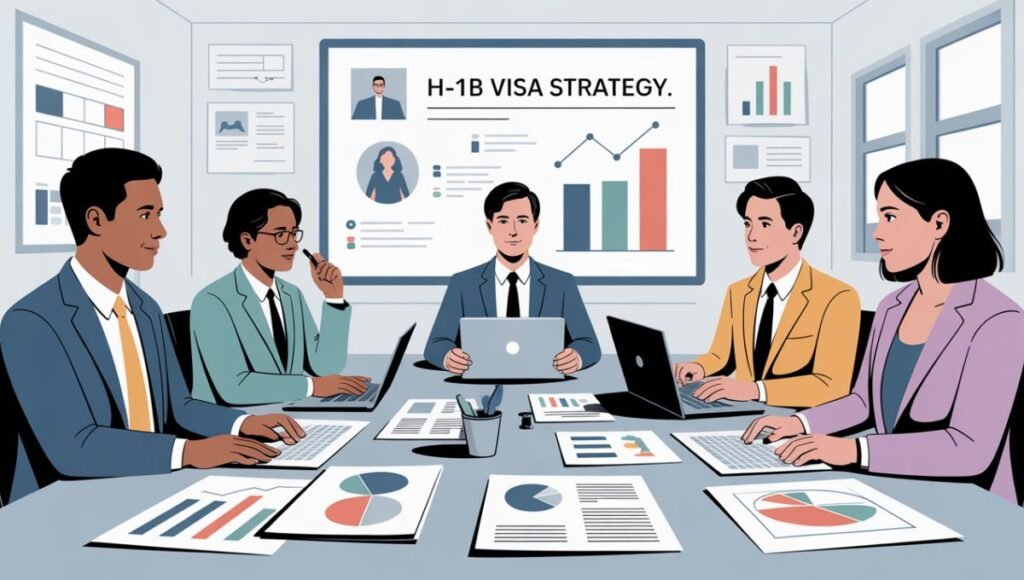
The recent introduction of a $100,000 annual fee for H-1B visa petitions has created significant challenges for U.S. small and medium-sized businesses (SMBs). For companies that depend on specialized international talent, the new policy could reshape hiring and retention strategies.
Rather than reacting in haste, SMB leaders can take proactive steps to manage risk, protect critical talent, and maintain business continuity. The following best-case strategies can help guide decision-making.
Frequently Asked Questions About the $100,000 H-1B Visa Fee for Small and Medium Businesses
The U.S. government recently announced a $100,000 annual fee for H-1B visa petitions. It applies mainly to new filings and renewals, aiming to limit program misuse and prioritize high-value roles.
Small and medium businesses may face higher costs for sponsoring or renewing H-1B employees. Companies should audit their workforce, focus sponsorship on critical roles, and consider alternatives such as green-card sponsorship or remote staffing.
At present, there are no broad exemptions for small businesses, though some nonprofits and research institutions may qualify. Employers can explore other visa categories (O-1, L-1, F-1 OPT/STEM) or permanent residence options to reduce reliance on costly H-1B renewals.
Key strategies include:
– Accelerating green card sponsorship for valued employees.
– Limiting H-1B filings to high-value, hard-to-replace roles.
– Building hybrid or near-shore teams for support functions.
– Monitoring litigation and policy updates that may change the fee.
Yes. Many Indian professionals work in the U.S. on H-1B visas, and their employers will need to absorb or plan for the higher renewal cost. Smaller firms may adjust staffing, while large tech companies may prioritize senior or specialized roles.
Businesses should:
– Track visa expiration dates well in advance.
– Budget for renewal costs or start the green card process early.
– Explore remote roles or other visa types if renewals become financially impractical.
Yes. Trade groups and business associations are challenging the legality of the fee, arguing it exceeds executive authority. Monitoring these cases can help employers understand whether the fee may be reduced, delayed, or overturned.
Audit and Prioritize Your H-1B Workforce
Begin by mapping out your current H-1B employees:
- Track expiration dates, amendment requirements, and renewal timelines.
- Identify which employees are essential to revenue, innovation, or client delivery.
- Focus retention efforts and budget on high-impact roles while reevaluating positions that can be localized or automated.
Accelerate Permanent Residence Pathways
Consider moving key employees onto the green card track (PERM → I-140 → Adjustment of Status).
- Workers with Employment Authorization Documents (EADs) are no longer tied to costly H-1B renewals.
- Early sponsorship also sends a strong signal of commitment, improving morale and loyalty.
Explore Alternative Visa Categories
Where appropriate, diversify your immigration portfolio:
- O-1 visas for individuals with exceptional skills in technology, science, design, or business.
- L-1 visas for intra-company transfers from a foreign office.
- F-1 OPT/STEM OPT for recent U.S. graduates, providing up to three years of work authorization before an H-1B is needed.
Adopt Flexible and Remote Talent Models
- For roles that don’t require a physical presence, assess remote or near-shore arrangements.
- Hybrid teams allow you to retain critical expertise while reducing the number of costly H-1B renewals.
- Evaluate outsourcing non-core tasks so internal resources remain focused on strategic priorities.
Target H-1B Sponsorship to High-Value Roles
Reserve H-1B filings for positions that are genuinely irreplaceable:
- Senior engineers, product leaders, or specialists in niche domains often justify the investment.
- Complement this with training and upskilling U.S.-based staff for routine or entry-level responsibilities.
Monitor Policy and Legal Developments
- Keep abreast of litigation and regulatory updates; several organizations are challenging the fee.
- Engage with industry associations advocating for relief for small firms and start-ups.
- Regularly review your workforce plan in light of any policy changes or exemptions.
Communicate Clearly with Your Workforce
Transparency builds trust:
- Outline your company’s approach to visa renewals, green card sponsorship, and potential remote opportunities.
- Encourage employees to prepare documentation early and explore permanent residence options.
Conclusion
The $100,000 H-1B fee introduces complexity, but SMBs that act strategically can continue to access global talent. By prioritizing key employees, using alternative pathways, and aligning sponsorship with business value, companies can safeguard their workforce and remain resilient in a changing immigration environment.